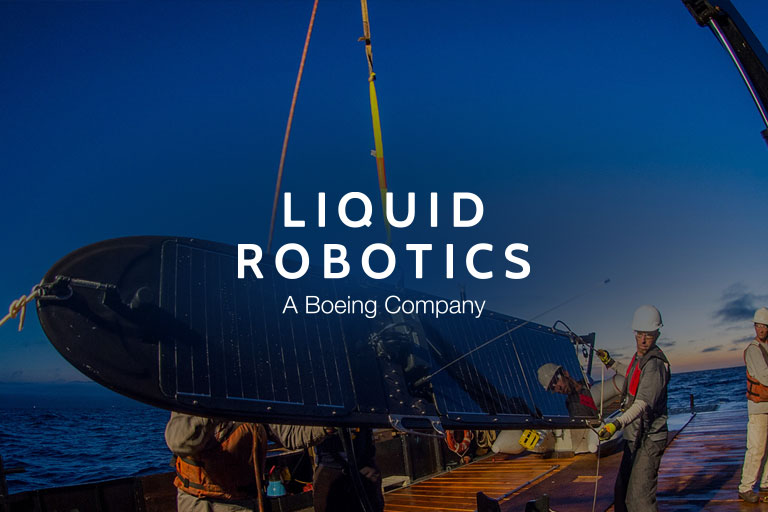
Liquid Robotics makes the Wave Glider, the most experienced ocean surface robot in the world. Despite proven capability, the Wave Glider faced difficulties gaining traction with certain buyer constituencies. Robots are considered cold and inhospitable — abstract to many people. The challenge: make a robotic product a point of broader human interest and explain its multifaceted benefits compared to boats and buoys.
Key Results
- National viral media attention including Al Roker on NBC’s Today show
- International media coverage across tech and weather outlets
- Thousands of direct Twitter interactions with the robots from users worldwide
- Dramatic increase in website activity
- Teaming agreement with Boeing within one month of the campaign
- Successful acquisition by Boeing two years later at an estimated capitalization value of over $300 million
The Challenge
Liquid Robotics had a proven, capable product in the Wave Glider — an autonomous ocean surface robot that could collect and transmit ocean data continuously, powered entirely by wave energy and solar. But the product faced a fundamental perception problem: robots are considered cold and abstract. To certain buyer constituencies — defense, oil and gas, climate science — the technical specs were compelling, but the Wave Glider wasn’t breaking through to broader awareness. Liquid Robotics needed the kind of attention that would put the Wave Glider in front of decision-makers who didn’t yet know they needed it — and demonstrate the platform’s capabilities in a way that was impossible to ignore.
What We Did
The Artesian Network discovered that the engineering team had a skunkworks feature allowing public tweets to trigger a return photo, video, and weather conditions from a Wave Glider via satellite. In August 2014, two tropical cyclones — Iselle and Julio — were heading toward Hawaii. We mobilized:
- Uploaded the Twitter interaction code to enable real-time public engagement with the Wave Gliders via satellite
- Navigated two Wave Gliders directly into the hearts of the approaching storms — positioning them to collect and transmit live data from inside the cyclones
- Launched a social media campaign inviting the public to tweet the robots for real-time storm conditions — photos, video, and weather data returned via satellite
- Pitched the story to national weather and tech media, framing it around the human drama of autonomous robots braving a hurricane
The Outcome
The story captivated the entire nation. TV weather personalities across the country, including Al Roker on NBC’s Today show, were tweeting the Wave Glider for storm conditions. International tech and weather blogs, online magazines, and newscasts covered the communicating robot braving the Pacific. Twitter users worldwide engaged directly with the robots — thousands of interactions from people who had never heard of Liquid Robotics before.
Website activity increased dramatically. Less than a month after the viral sensation, Liquid Robotics entered a major teaming agreement with Boeing. Two years later, Boeing acquired Liquid Robotics at an estimated capitalization value of over $300 million. The campaign did what brand marketing is supposed to do: it took a product people couldn’t relate to and made it unforgettable.